News
We run the studio on software we wrote
Leads, projects, estimates, invoices, the production calendar and the public site all live in one system we built for ourselves. Here's why that's the standard we hold client work to.
By VRTKL MEDIA1 min read
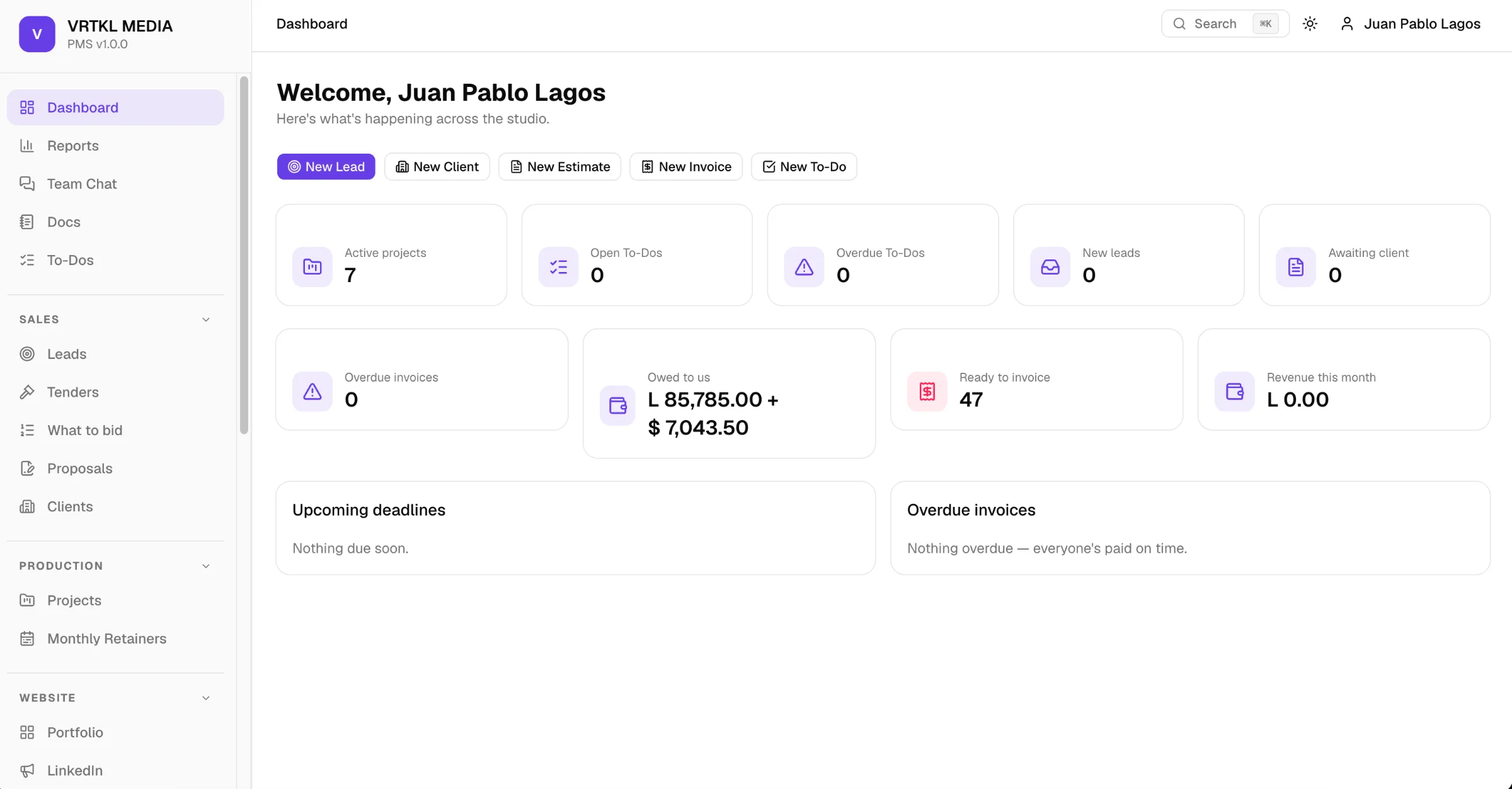
There is a particular kind of confidence you can only get by using your own work every day. Not demoing it — using it, on a Monday, when something is late and you need the number now.
The studio's operations run on a platform we designed and built in-house. It carries the sales funnel from first contact through proposal, the production pipeline through delivery, and the billing that follows: estimates, invoices, payments, expenses. The public site you're reading this on is part of the same system — the case studies and this journal are edited in the same place we track a project's status.
What that changes
Every rough edge is one we hit ourselves first. A filter that resets when you navigate away is a small annoyance in a demo and a daily irritation in real use — you fix the second one.
Nothing ships on the strength of a screenshot. If a number is wrong, it's wrong in our own accounts, and we find out.
We can show a client the thing rather than describe it.
The honest caveat
Building your own tools is not automatically a virtue. It's a virtue when the alternative genuinely doesn't fit, and a distraction when it does. We use plenty of software we didn't write.
What we won't do is recommend an approach to a client that we wouldn't run our own business on. That's the whole point of building it this way.
- #studio
- #product